
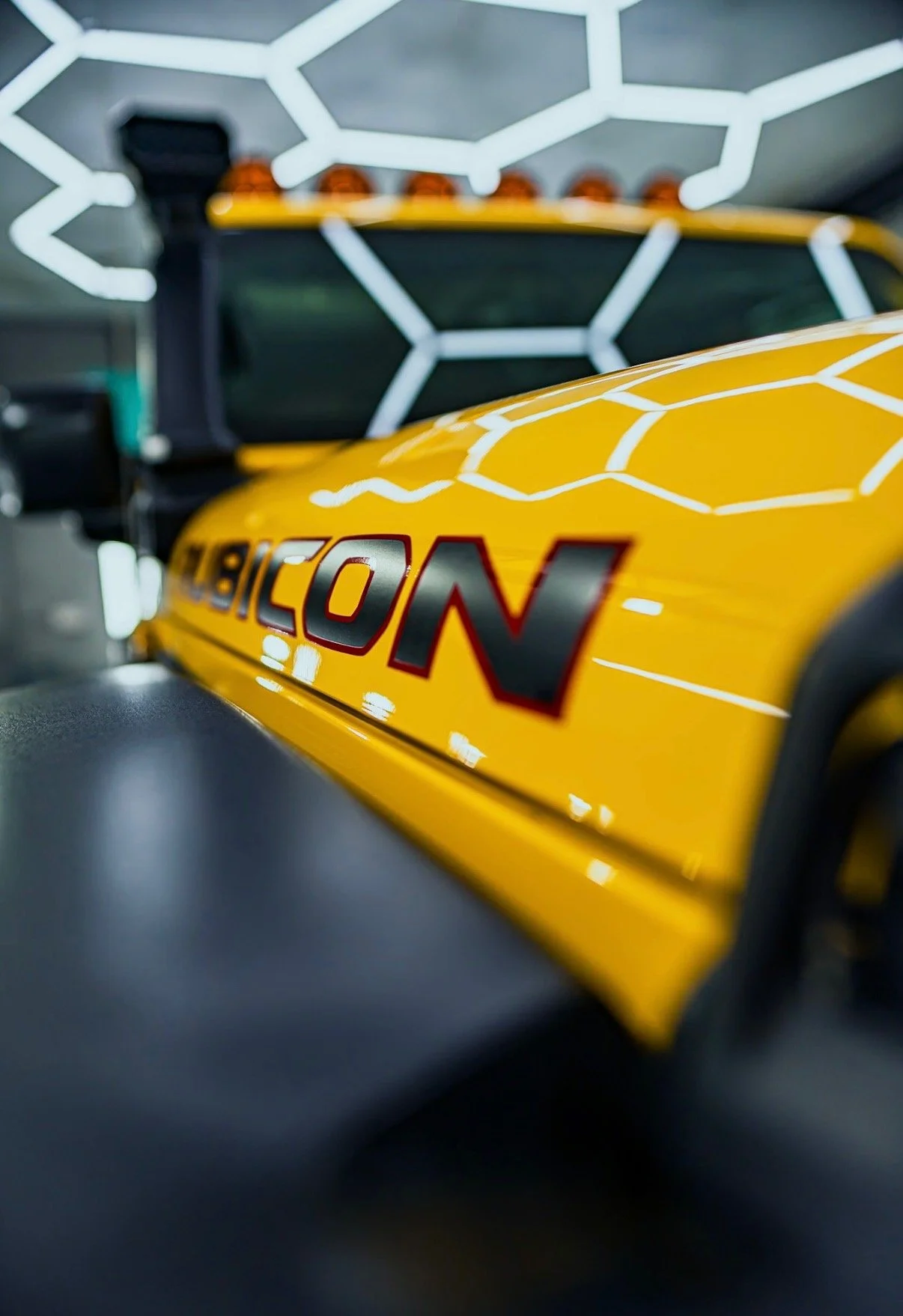
"Should I just get it waxed, or is it worth paying for ceramic?" We get asked some version of that question most weeks, usually from someone who's just had a car detailed and doesn't want to watch it go downhill again in a month. It's a fair question, and there isn't a one-size-fits-all answer. It comes down to your car, your budget, and how much you actually want to be thinking about paint care after we've handed the keys back.
Here's how we explain it to customers, minus the sales pitch. If you want the deeper dive on ceramic specifically, we've also written about whether ceramic coating is worth it.
Why Bother Protecting Your Paint at All?
The North West isn't kind to paintwork. Road salt through the winter, UV in the summer, tree sap if you're parked under anything green, bird mess whenever you're not looking. None of it is dramatic on its own, but it adds up, and unprotected paint will oxidise and dull faster than most people expect.
A protective layer, whatever form it takes, gives the paint something to sacrifice instead of taking that damage directly. It also makes the car noticeably easier to keep clean, which is honestly the part most customers care about more than the science.
Wax, sealant and ceramic all do this job to different degrees, and we build all three into the packages available through detailing.
Wax: The Classic, but High Maintenance
Wax is what most people grew up with. It's usually carnauba-based, gives that deep, warm glow classic car owners love, and it's genuinely lovely on the right car. The trade-off is longevity. You're looking at maybe 4 to 8 weeks before it's had enough, depending on how the car's used and what the weather's thrown at it.
We still recommend it now and again, mostly for show cars or for anyone who enjoys the process of looking after their car themselves. What we don't recommend it for is a daily driver sat outside all winter. It just can't keep up with that kind of exposure, and you'll end up back where you started within a month.
It's also the cheapest option, which is fine if you're happy reapplying regularly. If you're not, read on.
Sealant: The Sensible Middle Ground
Sealant does a similar job to wax but bonds to the clear coat more effectively, which means it lasts a lot longer, typically 3 to 6 months. The finish is a bit different too, more of a sharp, glassy shine than wax's warmer glow, and it holds up noticeably better against UV and water spotting.
This is usually where we point daily drivers who want proper protection but aren't ready to commit to a full ceramic package. It's a sensible option going into winter especially, when road salt is doing its worst and you don't want to be thinking about reapplying every few weeks.
Cost-wise it sits above wax but well below ceramic, which is exactly why it's such a popular middle-ground choice.
Ceramic Coating: The One That Actually Changes Things
This is where it stops being "topping up" and starts being a genuine upgrade. Ceramic coating chemically bonds with the paint rather than just sitting on top of it, so instead of a layer you reapply, you get a semi-permanent finish that can last anywhere from 2 to 5 years depending on the product and how many layers go on.
Practically, that means better resistance to UV fading, less risk of etching from bird mess or sap, noticeably tougher against light scratching and swirls, and a hydrophobic surface that makes water and dirt bead and run straight off. Customers often tell us their car simply stays cleaner for longer between visits, which tracks, since grime has a much harder time bonding to the surface in the first place.
It's the most expensive of the three, and it's not something that performs well as a rushed job. Proper prep matters here more than with wax or sealant, which usually means a full correction beforehand to make sure the finish underneath is right before anything gets sealed in for years.
Quick Comparison
| Wax | Sealant | Ceramic Coating | |
|---|---|---|---|
| Durability | 4 to 8 weeks | 3 to 6 months | 2 to 5 years |
| Cost | £ | ££ | £££ |
| Finish | Warm, deep gloss | Sharp, glassy shine | Deep, long-lasting gloss |
| Upkeep | Frequent reapplication | Moderate | Minimal once cured |
| Water repellence | Light | Moderate | Strong |
| Scratch resistance | Minimal | Light | Noticeably improved |
So Which One's Right for You?
Honestly, most of the daily drivers we see are better suited to sealant or ceramic than wax, purely because of how much the North West weather throws at cars here. If you're the type who enjoys a Sunday afternoon waxing the car yourself, that's a different story, and wax still has its place.
If you've had a correction done and want to lock that finish in for the long haul, ceramic is the one that actually pays for itself over time, since you're not paying for repeat details every few months just to get back to where you started.
Whatever you go for, prep matters as much as the product. Protection applied over paintwork that hasn't been properly decontaminated or corrected first will never perform the way it should, which is why we always sort the paint correction before anything gets sealed in.
Keeping It That Way
Whatever protection you choose, it's only as good as the upkeep behind it. That's the whole idea behind our Maintenance Club: regular visits that keep the protection performing and the car looking the way it did the day it left us.
Not sure which option's right for your car? Get in touch today and a member of the MJM team and we'll talk it through properly, no pressure, just an honest recommendation based on how you actually use the car. And if you're not sure we cover your area, check where we cover.